Sleds, training balls and plyometric boxes
A reference to equipment for short conditioning sessions, with the differences that affect floors, room layout and exercise choice.
These items need to be matched to a task: a sled needs a lane, a training ball needs a permitted throwing or slamming use, and a box needs an appropriate height and landing surface. A compact storage footprint does not mean the exercise fits a small room.
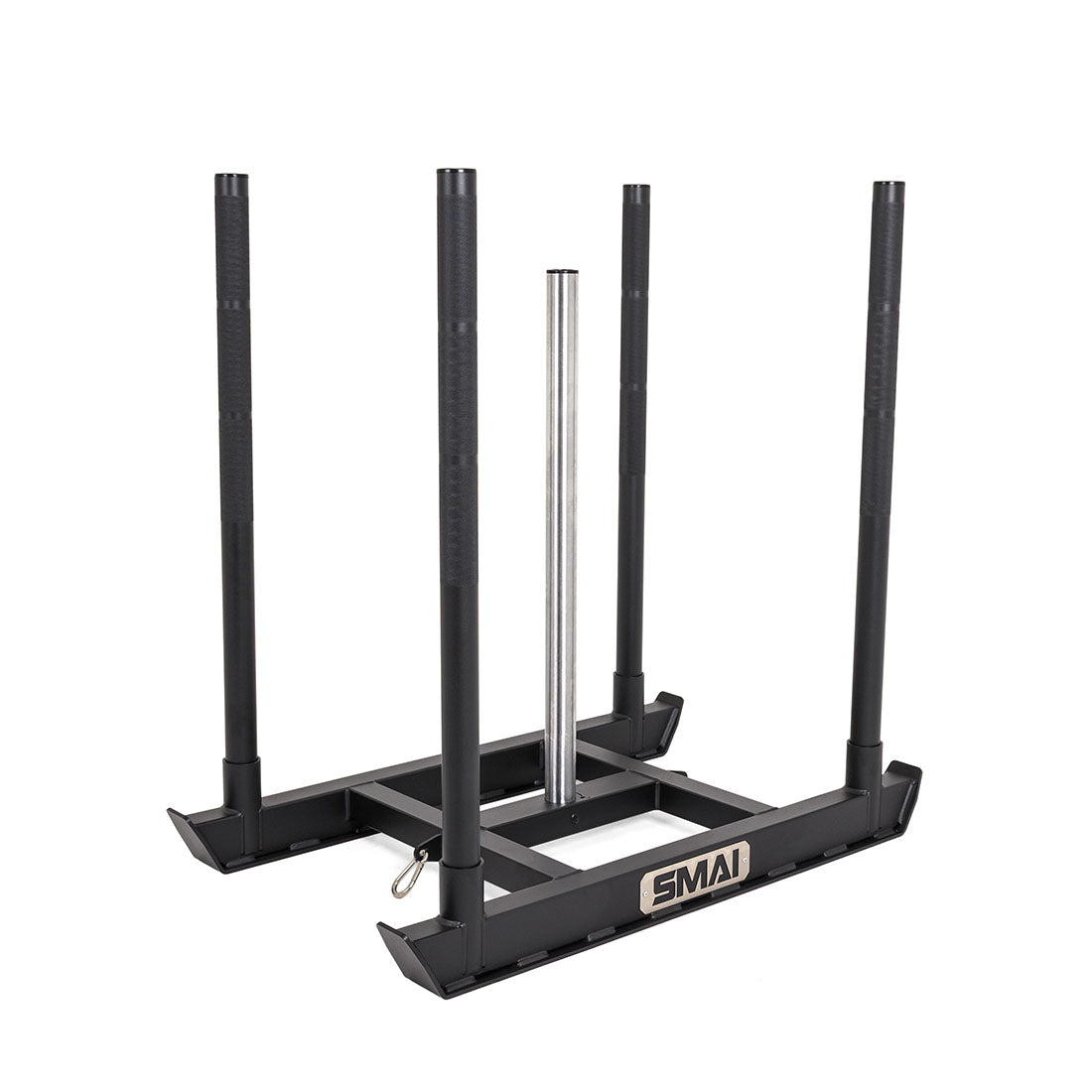
A 38 kg steel sled with four removable pushing poles and an 80 cm plate-loading stack. The central loading pole releases so plates can slide off sideways.
Photo: SMAI.Sliding and wheeled sleds
A sliding sled develops resistance through contact with the surface. The same plate load can feel different on another track, so record the surface and conditions as well as the kilograms. A wheeled resistance sled adds its own resistance mechanism; its settings are not automatically equivalent to a stack of plates on a sliding model.
Check the unloaded mass, compatible plate diameter, stack height, pushing positions and attachment points. A harness fixing point is not a supplied wearable harness. Rope, handles, plates and turf can be separate purchases. For repeated lanes, consider how the sled changes direction and whether the poles or load need to be moved each time.
SMAI’s Tower model is specified for sled turf and warns about skid wear on concrete. Its All Terrain model instead uses tyres and adjustable resistance. Those examples show why “works outdoors” is too broad a selection rule: the contact surface and the manufacturer’s instructions are part of the product choice.
Sources: SMAI: Tower Gym Sled · SMAI: All Terrain Resistance Sled
Medicine balls and slam balls are not interchangeable
Choose a ball by its construction and intended impact, then its mass and diameter. Some medicine balls are made for controlled exercises or specified rebound arrangements; dead or slam balls use a deformable shell and filling suited to slamming. A wall ball is another design category, usually selected around a throw to a target and catch, so verify its own permitted uses.
The distinction is explicit in SMAI’s instructions: its Commercial Medicine Ball is not for repetitive floor slams, while the Slam Ball range is designed for throwing and slamming. A label that simply says weighted ball is not enough to decide which drill it suits.
Consider how you pick up and catch the selected size. A heavier ball may also be larger, affecting grip and clearance. Do not infer a reliable rebound height from mass alone. Keep enough space for the expected path of the ball and use a surface approved for both the ball and the building.
Sources: SMAI: Commercial Medicine Ball use restrictions · SMAI: Slam Ball construction
Box height changes more than the jump
A three-in-one box offers different heights by turning it onto another face. Each orientation also changes the base and the landing area. The SMAI small wooden box gives 14, 16 and 20 inch options; it is a different size from the familiar larger competition box.
A rigid wooden box, a padded box with a rigid core and a soft foam box are not the same construction. Ask what is under the cover and what movements the maker permits. Padding may change contact comfort, but should not be taken as proof that a box cannot slide or tip. Load limits also need to be interpreted for the intended movement rather than as a licence to add any external weight.
| For a box purchase | Confirm |
|---|---|
| Height | The actual usable heights, in consistent units |
| Surface | Rigid, padded-core or foam construction |
| Base | Footprint in each intended orientation |
| Delivery | Assembled or flat pack, and required fasteners |
| Training space | Approach, landing, step-down and overhead clearance |
Sources: SMAI: Small Wood Plyometric Box
Cost the usable station
A complete conditioning order includes the accessories and space that make the exercise possible. Compare a sled with its lane and pulling equipment, a rebound drill with its approved target, and a box with its assembly requirements. If the room cannot support the movement, a low product price does not solve the constraint.
For progress records, keep the setup consistent. Note sled surface and direction, ball model and throwing task, or box orientation and external load. These details make a comparison between sessions more interpretable than a headline “conditioning score” across unlike pieces of equipment.
Sources: SMAI: Tower Gym Sled · SMAI: All Terrain Resistance Sled · SMAI: Commercial Medicine Ball use restrictions · SMAI: Slam Ball construction · SMAI: Small Wood Plyometric Box
Models mentioned in this article
SMAI Tower Gym Sled — Hybrid Series
Useful for push and pull work on a dedicated sled track when you already own Olympic plates and have room for a training lane.
Specifications & buying options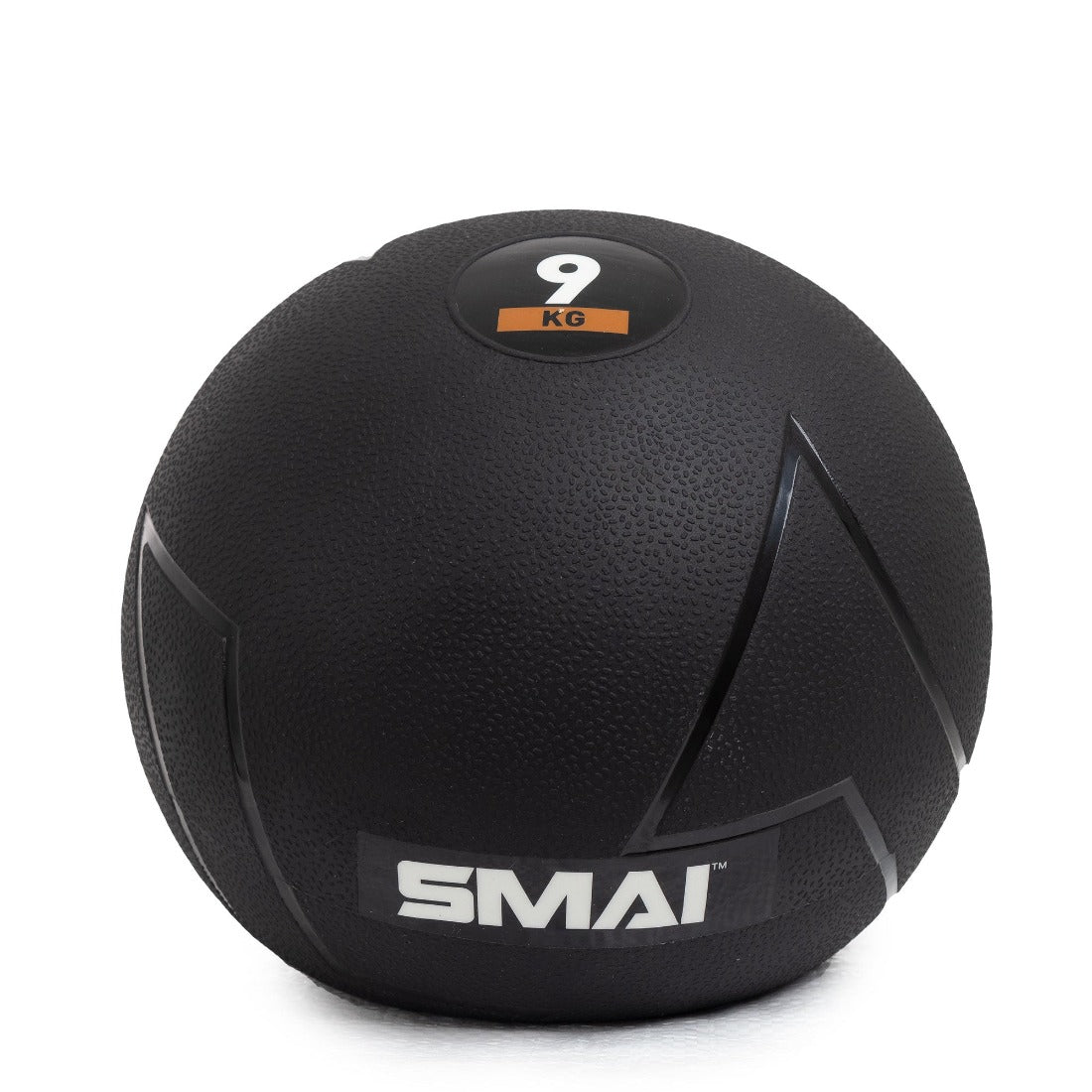
SMAI Slam Ball — 9 kg
Choose the slam-ball construction for floor throws when you have a suitable training surface and enough overhead space.
Specifications & buying options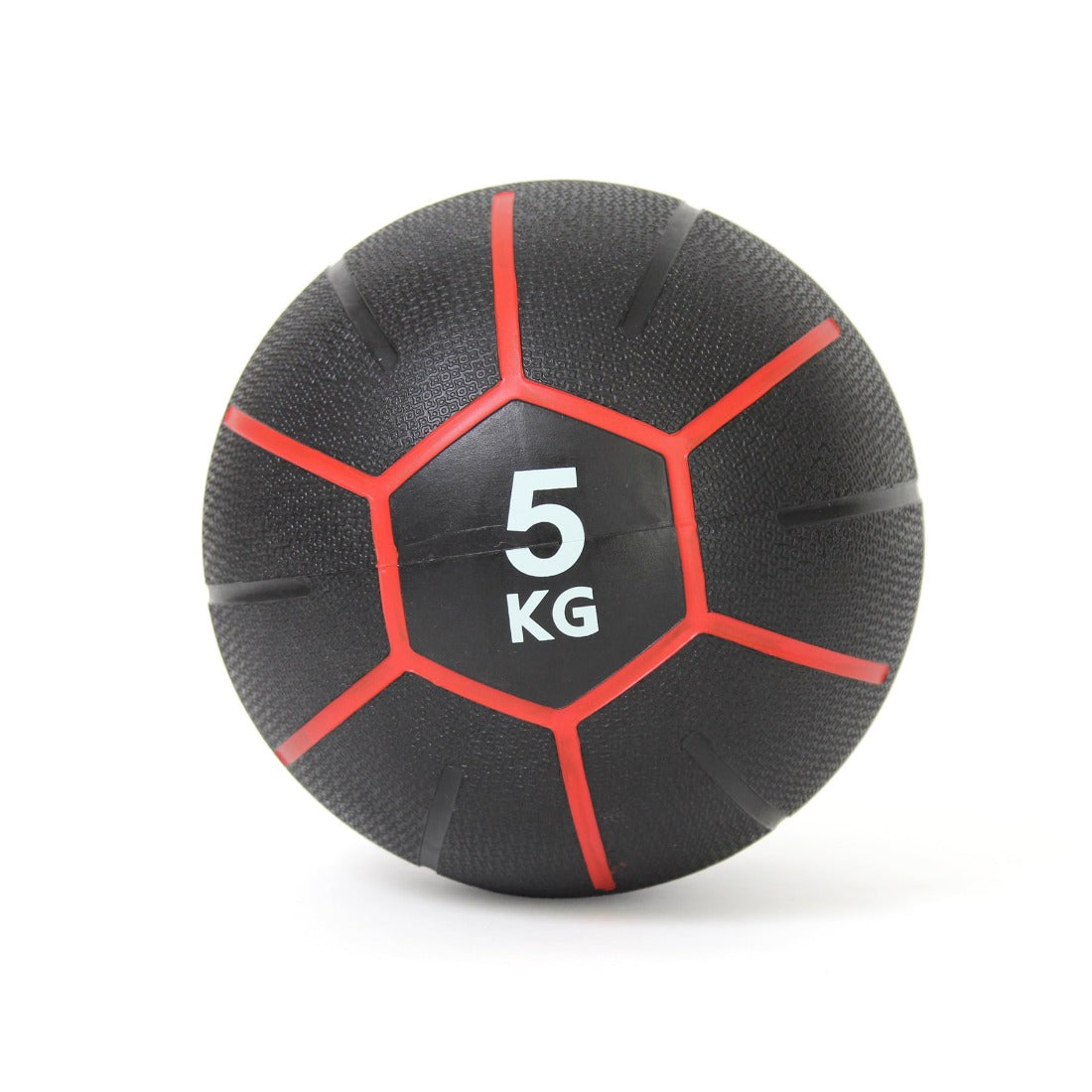
SMAI Commercial Medicine Ball — 5 kg
Useful for medicine-ball drills that suit its rebound and size. SMAI specifies a separate rebounder for throw-and-return impact work.
Specifications & buying options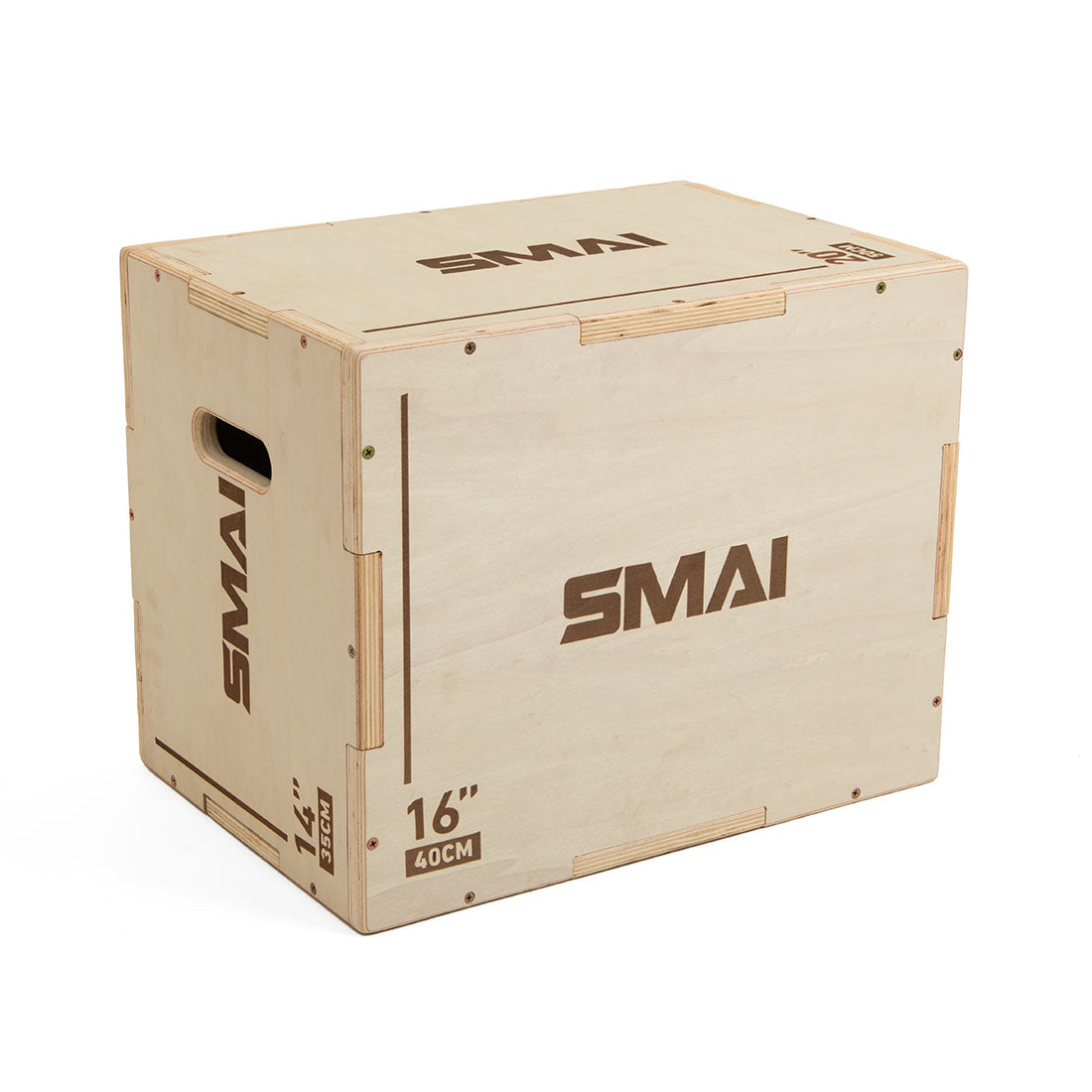
SMAI Small Wood Plyometric Box — 14 / 16 / 20 inch
Choose it when the usual 20 / 24 / 30 inch box is taller than you need, and a rigid wooden surface suits your training.
Specifications & buying optionsSources & further reading
Checked 17 Oct 2026. The links below identify the sources used for this article.