Gym flooring and storage: surfaces, sound and loads
Distinguish everyday rubber tiles from acoustic systems, then plan where the equipment rests and how you reach it.
Flooring protects a surface and changes how the room feels underfoot. Storage keeps equipment accessible and out of circulation routes. Neither a thick mat nor a heavy-looking rack proves that the supporting floor can carry a particular installation.
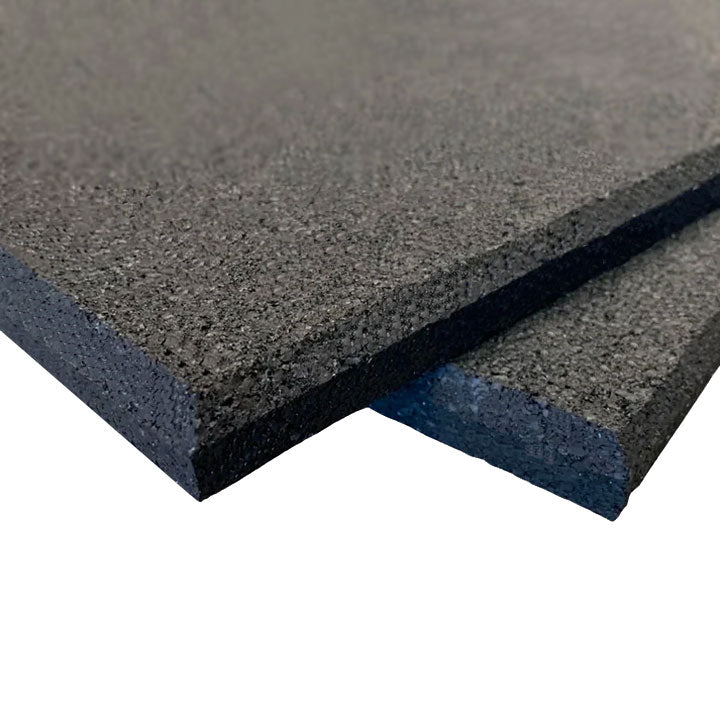
A single 1 m square recycled-rubber tile, 15 mm thick and approximately 14 kg. It can be laid without adhesive and cut to fit a room.
Photo: Command / Little Bloke Fitness.Floor protection and sound control are different questions
A dense rubber tile can provide a practical gym wear surface, but its thickness alone does not establish the sound heard in the next room. The building, impact, contact area and floor assembly all contribute. Ask for testing that matches the proposed system when acoustic performance is a decisive requirement.
REGUPOL’s Australian range separates ordinary wear layers from multilayer systems designed for gym impact sound and vibration. Its technical literature uses different acoustic measures and system constructions. A single decibel number should therefore travel with its test method, assembly and conditions; it cannot be copied onto an unrelated garage tile.
For an upstairs room or a gym next to occupied space, decide the acceptable exercises before purchasing an entire floor. Quiet placement of equipment, controlling how loads are lowered and a suitable engineered installation can be different parts of the solution. An acoustic product claim also does not answer the separate structural-loading question.
Sources: REGUPOL Australia: gym and fitness acoustic flooring · REGUPOL Australia: sonusfit m 513 system
Measure the finished room, not just its area
Check tile dimensions, thickness, density, edge details and installation instructions. Plan around door swings, thresholds and clearances under machines. Include cuts and awkward corners when counting tiles; a rectangle divided by tile area gives a starting calculation, not a finished cutting plan.
For example, the Command 15 mm black tile is 1 m square and approximately 14 kg. Six uncut tiles cover 6 m² and weigh approximately 84 kg before equipment, calculated from those specifications. Its seller calls for a pallet-freight quote. Even a modest room covering can therefore need a considered delivery and carrying plan.
Check what a platform order includes. Some products are a steel perimeter frame with the rubber or timber surface purchased separately. Cost the complete surface and its outside dimensions, rather than assuming that the first photograph shows everything in the base price.
Sources: Little Bloke Fitness: Command 15 mm tile · Rogue: Deadlift Platform frame and surface options
Storage capacity has two meanings
A rack can have enough shelf length for your dumbbells yet lack a confirmed load rating for their combined mass. Ask separately about physical fit, each shelf’s limit, total capacity and any fixing requirements. “Holds fifteen pairs” is not a universal kilogram rating: fifteen light pairs and fifteen heavy pairs are different loads.
Plate trees, horizontal plate slots and dumbbell shelves also need different measurements. Check peg diameter and length for plates, slot width for thick bumpers, and shelf-rail spacing for dumbbell heads. A wall-mounted storage product adds a structural fixing requirement that a freestanding frame does not share.
| Stored equipment | Check first |
|---|---|
| Dumbbells | Head and handle fit, shelf spacing, shelf and total load limits |
| Weight plates | Hole diameter, disc diameter, thickness and usable peg or slot length |
| Barbells | Supported surfaces, overall length and clearance for removal |
| Bands and straps | Dry storage, protection from sharp edges and maker’s care instructions |
Sources: Little Bloke Fitness: three-tier dumbbell storage · PTP: storage and care guidance
Leave room to retrieve and replace equipment
Mark the storage footprint and the space a person needs in front of it. A rack tucked into a corner may fit perfectly yet be awkward to unload with two heavy dumbbells. Keep commonly used weights within a manageable reach and leave the route between bench, rack and exit unobstructed.
Before finalising an Australian order, group equipment, flooring, storage and freight into the same room budget. Ask whether large items arrive on a pallet, who unloads them and which parts require assembly. Keep an inventory of model names and instructions so replacements and later additions can be checked against what is already installed.
Sources: Little Bloke Fitness: Command 15 mm tile · Little Bloke Fitness: three-tier dumbbell storage
Models mentioned in this article
Command Classic Rubber Gym Tile — black 1 m² / 15 mm
A practical removable surface for an Australian garage gym when a dense rubber tile suits the subfloor and the planned equipment.
Specifications & buying options
360 Strength Hex Dumbbell Storage Rack — three-tier single bay
Useful for bringing a fixed-dumbbell collection into one bay while leaving the handles accessible between sets.
Specifications & buying options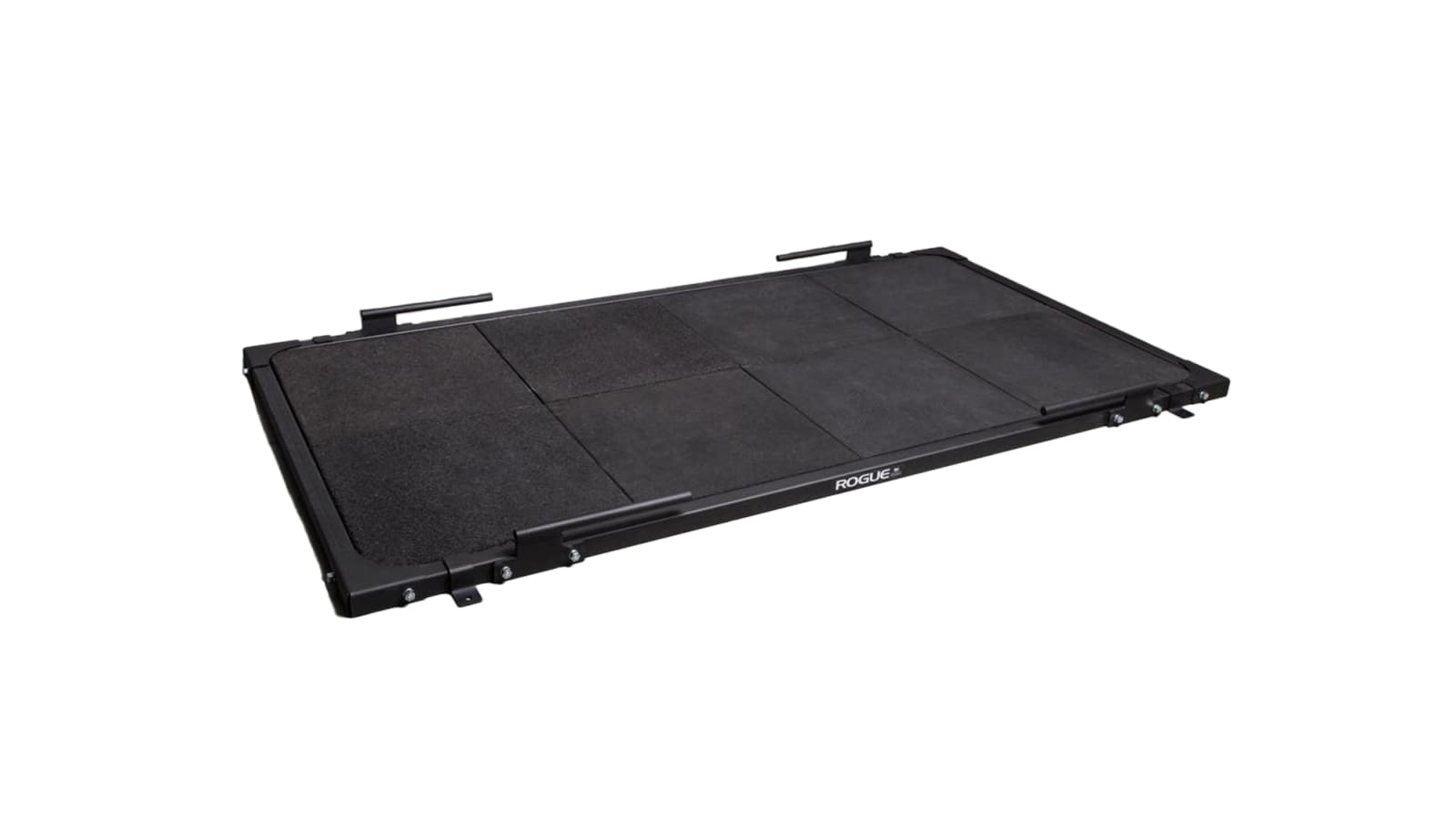
Rogue Deadlift Platform — frame only
A defined deadlift station can justify the frame when it has a permanent place in the room. Budget the surface and any chosen platform accessories as one finished setup.
Specifications & buying options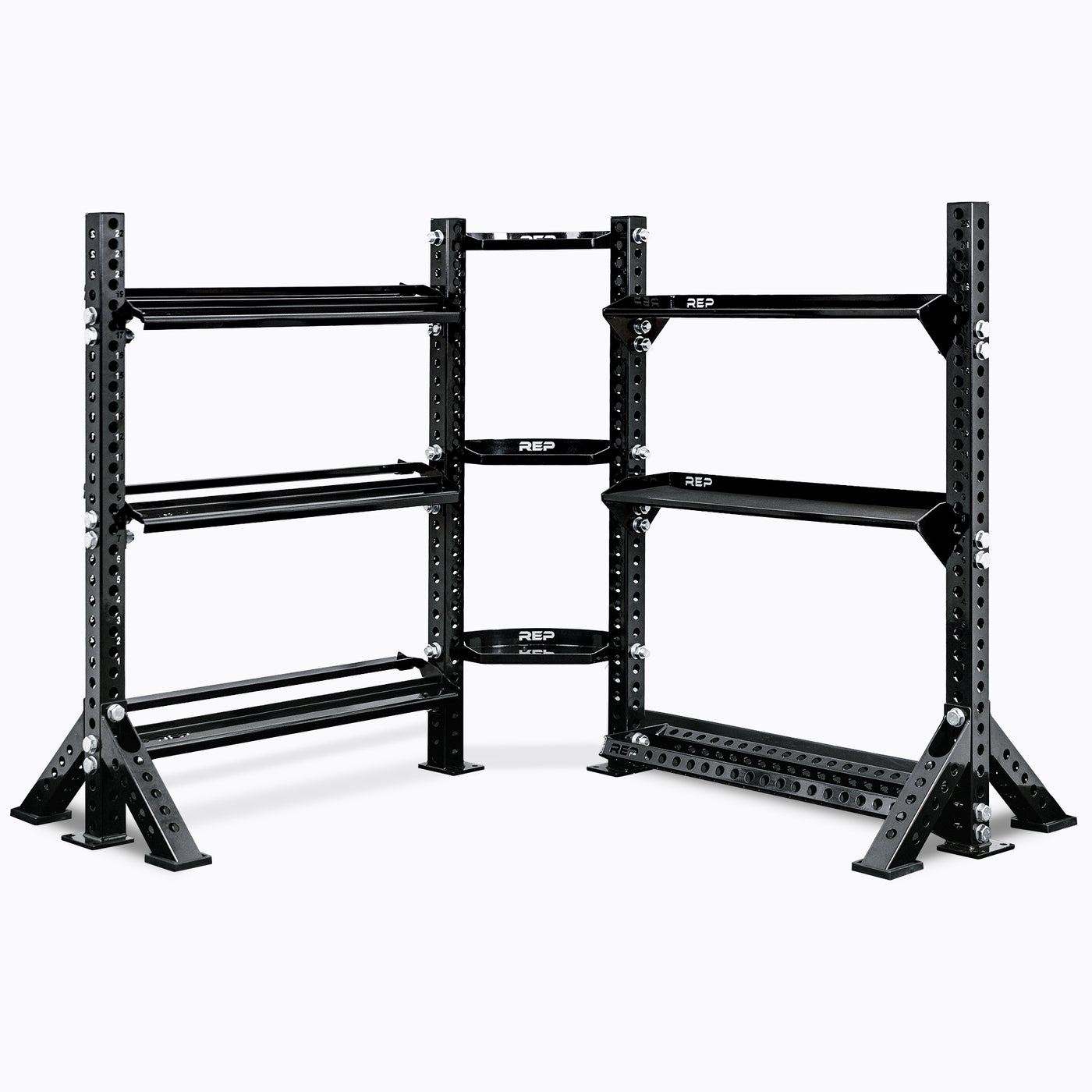
REP Stand-Alone Modular Storage System 2.0
Build storage around the collection you already own once a simple stand is no longer enough. Choose shelf types and widths before extending the run around the room.
Specifications & buying optionsSources & further reading
Checked 17 Oct 2026. The links below identify the sources used for this article.