Weight plates: bumpers, iron, calibration and small increments
Read plate diameter, bore, thickness and package mass without confusing a rubber coating with a bumper design.
A weight plate must fit the bar or machine and suit the way the load is lowered. Its outer diameter sets the bar’s starting height, its thickness uses sleeve space, and its mass determines the load. Those four measurements are more useful than colour alone.

A pair of full-diameter 20 kg rubber bumpers for Olympic sleeves. Their 450 mm diameter keeps the bar at the same starting height as the other full-size plates in this range.
Photo: 360 Strength / Little Bloke Fitness.Four common plate types
A bumper uses a broad rubber body intended for the maker’s specified lifting and landing conditions. A rubber-coated iron plate may have only a protective coating around a dense core; it should not be assumed to behave like a bumper. Calibrated competition plates prioritise specified mass accuracy and dimensions. Small change or fractional plates fill the gaps between larger loading steps.
Check both the material and the permitted use. An Olympic-sized hole does not certify a plate for dropping. Similarly, a competition colour scheme does not establish approval by a sporting body. Read the current product specification and, when event preparation matters, the relevant equipment rules.
| Type | What to compare |
|---|---|
| Rubber bumper | Outer diameter, thickness, hub, mass tolerance and landing restrictions |
| Iron or steel plate | Thickness, handling features, coating and floor protection |
| Calibrated plate | Stated tolerance, calibration method and event approval |
| Fractional or change plate | Smallest balanced increase, bore and whether sold singly or in pairs |
Sources: IWF: disc dimensions and colours · IPF: competition plate tolerances · Little Bloke Fitness: PRO HG bumper specifications · Little Bloke Fitness: fractional plate inventory and care
A 20 kg plate need not be the same size
The IWF specifies a 450 mm diameter for its largest competition discs. Many training bumpers adopt that size across several weights, but ordinary plates can have different diameters. A smaller disc lowers a bar that rests directly on the floor, changing the starting position even when the labelled weight is identical.
Read the centre opening separately. Nominal 50 mm Olympic sleeves need a compatible bore and sensible clearance; small-sleeve standard plates will not fit them. On a machine, also check whether the disc can clear the frame, neighbouring plates and the full movement path.
Sources: IWF: disc dimensions and colours · IPF: competition plate tolerances · Little Bloke Fitness: PRO HG bumper specifications
Build a load progression, not just a total
Write down the bar mass, then choose pairs that make the weights you actually need. As a calculated example, a 20 kg bar plus one 20 kg plate at each end equals 60 kg. Adding a 1.25 kg plate at each end makes 62.5 kg. Collars contribute their own mass; ordinary training clamps are not necessarily calibrated.
A 5 kg fractional set can be enough to make many smaller steps. The 360 Strength set contains pairs of 0.25, 0.5, 0.75 and 1 kg discs: its smallest balanced addition is 0.5 kg. Those small plates supplement your main loading plates; they do not provide a full-size floor contact surface.
For a machine with two separately loaded arms, check how many plates each side needs. A rack of heavy pairs may still lack the smaller duplicate plates needed to progress both arms evenly.
Sources: Little Bloke Fitness: PRO HG bumper specifications · Little Bloke Fitness: fractional plate inventory and care
Space, accuracy and the delivered order
Add the thickness of every disc on one side and leave room for the collar. That estimate can explain why two plate sets with the same mass have different maximum loads on a short sleeve. A photograph of a fully loaded bar is not enough unless the plate models and sleeve length match yours.
Keep nominal mass, seller tolerance and competition calibration distinct. If accuracy matters, compare the specified tolerance at each weight and use a suitable scale consistently. A percentage tolerance grows in absolute grams as the plate gets heavier.
Before paying, total the number of discs, their combined mass, freight and the route into the gym. Confirm a pair price against a pair price. Allocate storage pegs or floor slots for the actual diameters and thicknesses, and follow the supplier’s rules for surfaces, moisture, cleaning and drops. A complete plate order includes the small weights you will need next month.
Sources: IPF: competition plate tolerances · Little Bloke Fitness: PRO HG bumper specifications · Little Bloke Fitness: fractional plate inventory and care
Models mentioned in this article
360 Strength PRO HG Bumper Plates — 20 kg pair
Choose the 40 kg pair when you want to add load to an existing Olympic bar and compatible bumper set.
Specifications & buying options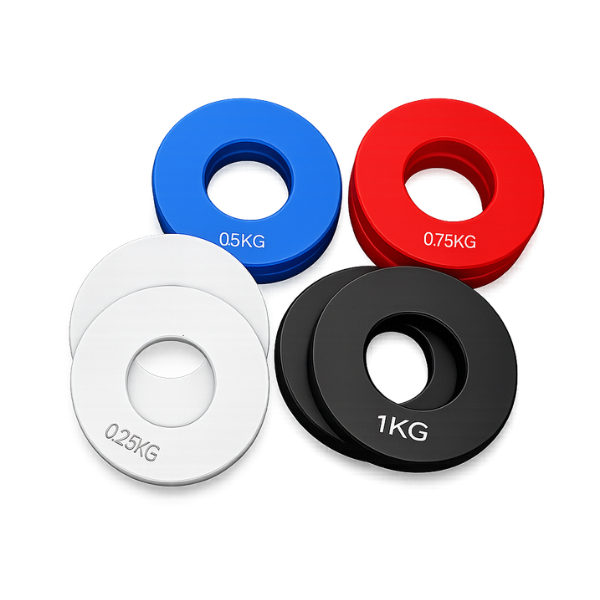
360 Strength Fractional Weight Plates — 5 kg set
A useful addition when a 2.5 kg barbell increase is too large, especially for presses or carefully specified training loads.
Specifications & buying options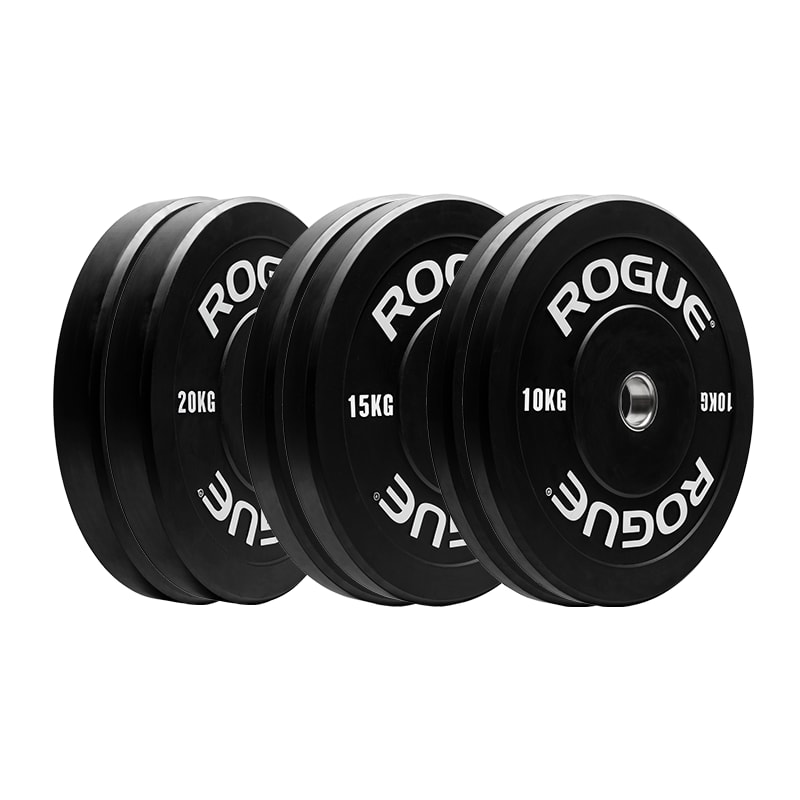
Rogue Echo Bumper Plates — 90 kg set
A straightforward kilogram starting set for a barbell gym. Together with a 20 kg bar it supplies 110 kg before collars; order more weight immediately if current lifts exceed that.
Specifications & buying options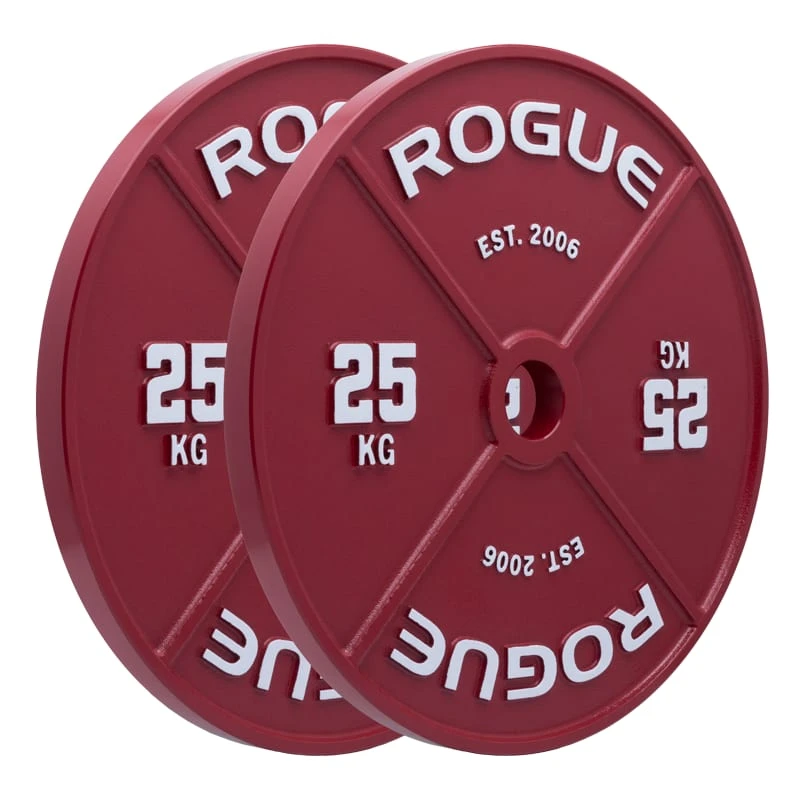
Rogue Calibrated KG Steel Plates 2.0 — colour
Pay for calibration and sleeve space when those details matter to your powerlifting setup. Select the needed denominations rather than assuming a pictured group is the supplied set.
Specifications & buying optionsSources & further reading
Checked 17 Oct 2026. The links below identify the sources used for this article.